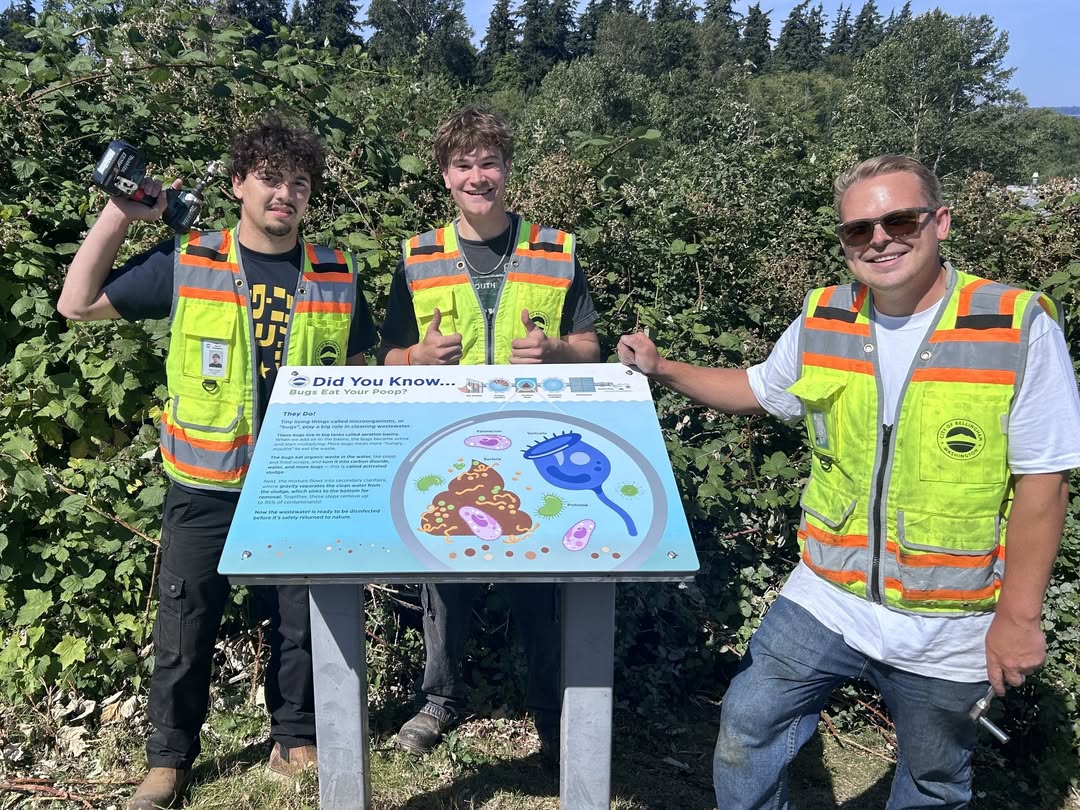
The next time you walk the waterfront trail near Post Point in Bellingham, look for three new interpretive signs installed in July 2026 just outside the Post Point Wastewater Treatment Plant. The signs break down the full wastewater treatment process in plain language, highlight the microscopic organisms that do much of the heavy lifting, and explain the difference between wastewater and stormwater, a distinction that trips up a lot of people.
What the Signs Explain
The three panels cover a lot of ground. The first walks visitors through the steps the city takes to clean wastewater before it is discharged, from initial screening that removes solids to biological treatment stages where microorganisms consume organic matter. The second panel zeros in on those microorganisms themselves, the bacteria and other tiny life forms that are, as the city put it, the waste-eating heroes of the operation. The third sign addresses the wastewater-versus-stormwater distinction, which matters because the two systems are handled completely differently.
Stormwater runs off streets, parking lots, and rooftops into storm drains that lead directly to local waterways, largely untreated. Wastewater from sinks, showers, toilets, and appliances flows to Post Point for full treatment before any discharge. Understanding the difference helps residents make better decisions about what they pour down the drain versus what hits the pavement outside, since both ultimately affect Bellingham Bay and the broader Salish Sea ecosystem.
The signs were designed and installed by seasonal staff at the city's Public Works department, giving those employees a hands-on learning experience alongside the public-education goal. For residents curious to go deeper on how the treatment process works, the City of Bellingham's wastewater treatment page at cob.org/waste-water-treatment has detailed information.
About Post Point and Its Role on the Waterfront
Post Point sits at the southern end of Bellingham's waterfront, along the shore of Bellingham Bay just south of the Fairhaven neighborhood. The treatment plant has operated at that location for decades, and the trail that runs past it connects Fairhaven's Village Green area to the broader South Bay Trail network. It is a popular route for walkers, cyclists, and joggers, making the interpretive signs visible to a large cross-section of the community.
Post Point has also been at the center of a longer environmental conversation in Bellingham. The plant uses an incinerator to dispose of sewage sludge, a process that has drawn scrutiny over its release of PFAS compounds and its operating costs. The city has been studying alternatives as part of an emissions control upgrade project. Those conversations make the new interpretive signs even more timely: residents walking past the facility now have a better baseline for understanding what happens inside.
The Whatcom County Health and Community Services department monitors water quality in Bellingham Bay and surrounding marine areas, and its data feeds into decisions about how treatment standards are set locally. Residents interested in the health of local waterways can find water quality testing results and advisories on the county health department's website.
Simple Steps Residents Can Take
The signs also include tips for how ordinary residents can help protect Bellingham's waterways from their own homes. Among the most impactful: avoid flushing anything other than toilet paper and human waste, do not pour fats, oils, or grease down the drain, and be cautious with medications, cleaning products, and personal care items that can pass through treatment systems and enter waterways.
On the stormwater side, residents can help by sweeping driveways instead of hosing them down, picking up pet waste before it washes into storm drains, and being careful with fertilizers and pesticides in yards adjacent to drainage channels. Small individual actions add up across a city of nearly 100,000 people.
The interpretive signs are free to view any time the trail is accessible. The Post Point area is open to foot traffic year-round, and the waterfront location makes it an appealing stop regardless of the season. More details on the ongoing PFAS and incinerator conversation at Post Point provide useful context for anyone who wants to understand the broader debate around how the facility operates.