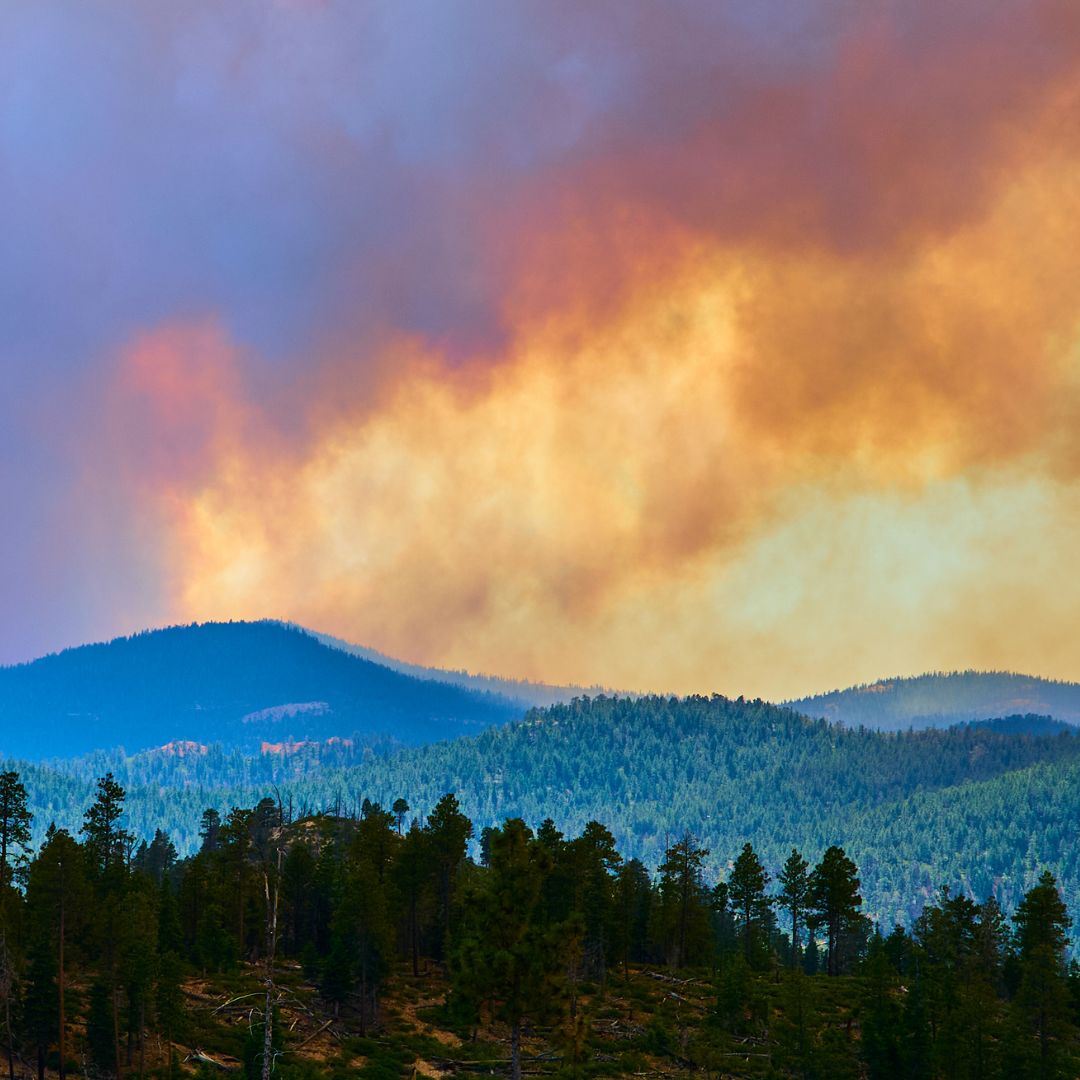
Multiple wildfires burning across Washington, Oregon, and British Columbia are pushing smoke into Whatcom County this week, coinciding with a stretch of unusually hot weather. The Northwest Clean Air Agency has issued an Air Quality Alert through Thursday, August 6, at 5 p.m., while the National Weather Service has issued a Heat Advisory running from 10 a.m. Wednesday, August 5, through 10 p.m. Thursday, August 6. The combination of poor air quality and elevated temperatures poses real health risks, particularly for children, older adults, pregnant individuals, and anyone with asthma, COPD, or heart disease.
What the Alerts Mean
The Air Quality Alert affects the entire county, with conditions most likely to reach unhealthy levels in the eastern portions closer to the Cascades, including the Deming, Kendall, and Glacier corridors. Fine particulate matter from wildfire smoke, known as PM2.5, can irritate the eyes, nose, throat, and lungs even at moderate levels and can cause more serious breathing problems for sensitive groups when concentrations climb higher. PM2.5 particles are small enough to bypass the body's natural filtering mechanisms in the nose and upper airway, traveling deep into the lungs and, in high concentrations, entering the bloodstream. That is why standard cloth masks and surgical-style medical masks, which filter larger particles, provide little meaningful protection against wildfire smoke.
The Heat Advisory forecasts temperatures of 85 to 90 degrees Fahrenheit across parts of Whatcom County on Wednesday and Thursday. That range poses a moderate risk of heat-related illness, especially when combined with smoky air that discourages opening windows or spending time outside to cool down. The two hazards interact in ways that compound each other: residents who would normally open windows in warm weather to ventilate their homes are advised to keep them closed to prevent smoke infiltration, which can leave indoor spaces warmer than they would be during a typical summer hot spell. Forecasters have noted that warm and dry conditions could persist through Friday, with only a possible return of some moisture over the weekend.
A Stage 2 burn ban remains in effect countywide until further notice. All open burning is prohibited. The ban has been in place since July 17. DNR fire danger for the lowlands is rated as High, with the Cascades at Moderate to High. Residents should not attempt any outdoor burning, including recreational fires in fire pits or chimineas, until the ban is lifted. Violations of a Stage 2 burn ban can result in civil penalties under Washington state law.
How to Protect Yourself From Smoke
Whatcom County Health and Community Services (WCHCS) is urging residents to take several specific steps to reduce their exposure to wildfire smoke. Monitor air quality frequently using the AirNow app or website or the Northwest Clean Air Agency. Both tools provide current readings at monitoring stations across the region and offer forecasts so you can plan outdoor activities around periods of better air quality. Limit time outdoors and avoid strenuous activity outside, since breathing harder during exercise draws more particles deeper into the lungs. If you must go out in smoky conditions, wear a well-fitting N95 mask. Cloth and standard medical masks do not provide effective protection against wildfire smoke particles.
Free N95 masks are currently available in the main lobby of Whatcom County Health and Community Services at 509 Girard Street in Bellingham. Supplies are limited to three masks per person. Pick-up hours are Monday through Thursday from 8:30 a.m. to 4:30 p.m. and Friday from 8:30 a.m. to 3:30 p.m. An N95 is only effective when it fits snugly against the face with no gaps at the sides or chin. People with beards or facial hair may find that standard N95 masks do not seal properly, which reduces their effectiveness significantly.
Inside your home, keep doors and windows closed and set air conditioning to recirculate indoor air rather than drawing in fresh outdoor air. A portable HEPA air purifier will help filter particles from indoor air. If you do not have a purifier, you can build a simple DIY version using a box fan and a standard MERV-13 or higher furnace filter, secured to the back of the fan with tape so that air is drawn through the filter before being blown into the room. Avoid activities that add particles to indoor air: do not smoke or vape, burn candles, vacuum, or fry or broil food while the smoke is heavy outside. All of those activities generate their own fine particle pollution, adding to the burden on sensitive lungs. People with asthma, COPD, or heart disease should make sure their inhalers and medications are on hand and contact their healthcare provider if respiratory symptoms worsen during the smoky period.
Staying Safe in the Heat
When temperatures climb into the upper 80s and low 90s, heat exhaustion and heat stroke become real concerns. Heat exhaustion symptoms include heavy sweating, cool or pale skin, a fast or weak pulse, nausea, and muscle cramps. Heat stroke is more serious: it involves a body temperature above 103 degrees, hot and red skin, a rapid and strong pulse, and possible loss of consciousness. Heat stroke is a medical emergency requiring immediate 911 contact. Knowing the difference between the two and responding quickly can save a life.
Stay hydrated throughout the day and avoid sugary, caffeinated, or alcoholic beverages, which contribute to dehydration. Keep blinds or curtains closed on windows that receive direct sun to slow indoor warming. If your home lacks air conditioning, visit a cooled public space such as a library, shopping mall, or movie theater during the hottest part of the day, typically between noon and 6 p.m. A fan alone is insufficient when indoor temperatures exceed 90 degrees Fahrenheit; evaporative cooling from a fan blowing across a bowl of ice, or applying damp towels to the neck and wrists, can provide some relief when other options are limited.
Never leave children, elderly individuals, or pets unattended in a parked vehicle. Interior car temperatures can exceed 100 degrees Fahrenheit within minutes even with windows cracked. The risk is not limited to very hot days; interior car temperatures can reach dangerous levels on days in the mid-70s as well. Check on older neighbors or anyone living alone who may not have adequate cooling at home. People 65 and older and those with limited mobility face the greatest heat risk, and a brief check-in phone call or visit can make a critical difference.
If you plan to cool off at a local lake or Bellingham Bay, be aware that water temperatures remain dangerously cold despite the air temperatures. Cold water shock can cause rapid involuntary breathing and loss of muscle control within minutes, even for experienced swimmers. The shock response is involuntary and can trigger panic and drowning before a person has time to react. Always wear a life jacket on open water and enter cold water gradually rather than diving or jumping in.
For current air quality readings across Whatcom County and a full list of heat safety tips, visit the Whatcom County Health and Community Services website. Residents with health concerns related to smoke or heat can also call the county health department for guidance. Earlier coverage of the wildfire smoke situation and the North Cascades fires driving these conditions is available in recent reporting on the regional fire situation.