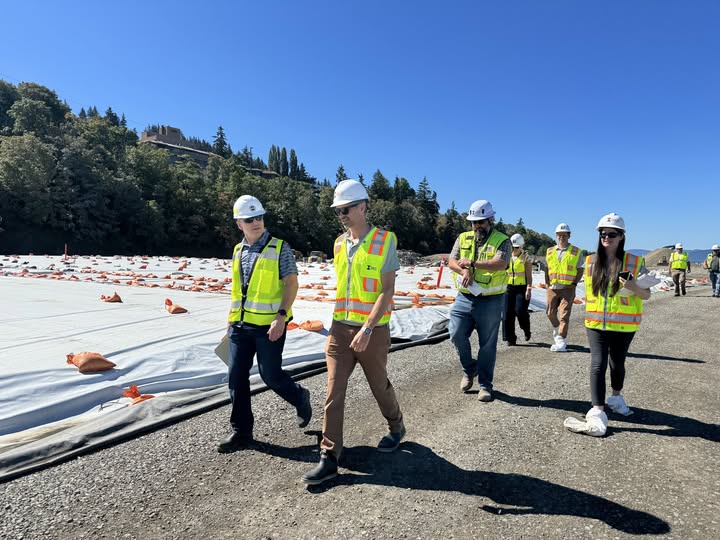
City of Bellingham staff, Port of Bellingham officials, and U.S. Rep. Rick Larsen joined the project contractor and other partners on July 31 for a hard-hat tour of the RG Haley and Cornwall Landfill cleanup site, visible from the popular South Bay Trail. The tour offered a firsthand look at how much progress has been made in transforming one of the waterfront's most polluted parcels into the future Salish Landing Park.
For anyone who has walked or biked the South Bay Trail in recent weeks, the activity at the site is hard to miss. Excavators, fencing, and active earthwork have replaced the quiet overgrown landscape that stood along Bellingham Bay for years. The hard-hat tour was a sign that the project has entered a significant phase of active remediation.
A History of Pollution on the Waterfront
The RG Haley site and the adjacent Cornwall Avenue Landfill represent decades of industrial and municipal waste disposal along Bellingham's central waterfront. The Cornwall Avenue Landfill, which operated through much of the 20th century, accepted municipal solid waste and construction debris. Over time, contamination from these operations migrated into the soil and groundwater beneath what is now a prime stretch of shoreline just south of downtown.
The City of Bellingham has been working with the Port of Bellingham and the Washington State Department of Ecology on a long-term cleanup plan for the area. The project falls under state environmental regulations governing contaminated sites, and the cleanup is being conducted in phases to manage cost and complexity.
The area sits adjacent to the South Bay Trail, one of Bellingham's most-used multi-use paths, which runs along the waterfront from downtown toward Fairhaven. Thousands of residents walk, run, and cycle the trail each week, making the transformation of the adjacent site a matter of broad community interest.
What the Cleanup Involves
The remediation work at the RG Haley and Cornwall Landfill site is a complex environmental undertaking. Crews are removing or capping contaminated material, addressing groundwater concerns, and preparing the land for eventual public use. The specific contaminants at sites like this typically include legacy industrial chemicals, heavy metals, and decomposition gases from buried organic waste.
According to information shared by the city, the July 31 tour made clear that significant progress has already been achieved since active cleanup began. City staff described the work as exciting, with visible transformation underway across the site. Details on the specific scope of material removed or capped were not released following the tour, but the project page maintained by the city provides ongoing updates for residents following the effort.
Rep. Larsen's participation in the tour signals continued federal attention to the project. Larsen has been engaged in multiple waterfront-related issues in Bellingham this year, including oversight visits to other local facilities. The presence of a congressional representative at a cleanup tour often reflects the potential for federal environmental or infrastructure funding to play a role in the broader project.
The Vision for Salish Landing Park
When the cleanup is complete, the site is planned to become Salish Landing Park, a new public green space along Bellingham Bay. The park would extend the accessible waterfront available to residents and visitors and connect more directly with the existing South Bay Trail corridor.
Bellingham has been steadily expanding its waterfront park infrastructure in recent years. The broader waterfront redevelopment area has seen significant investment, including work near the Trackside venue and the developing area around the former Georgia-Pacific site. Salish Landing would add another anchor to this evolving stretch of public shoreline.
The timing of a park completion has not been publicly confirmed, as cleanup work must be fully vetted and signed off by regulatory agencies before public access can be established. Environmental remediation of former landfill and industrial sites typically involves long-term monitoring requirements even after active cleanup is complete.
For South Bay Trail users curious about what is happening at the fenced-off site, more details are available on the City of Bellingham's project page for the RG Haley site. Residents can also find related context in earlier coverage of waterfront cleanup efforts at the Harris Avenue Shipyard, another major environmental remediation project along the same general stretch of Bellingham's industrial shoreline.
The project is expected to continue through the coming months, with the hard-hat tour representing a moment of visible momentum for a cleanup that has been years in the making. Residents who walk the South Bay Trail can expect ongoing activity at the site as crews continue their work toward the eventual opening of Salish Landing Park.