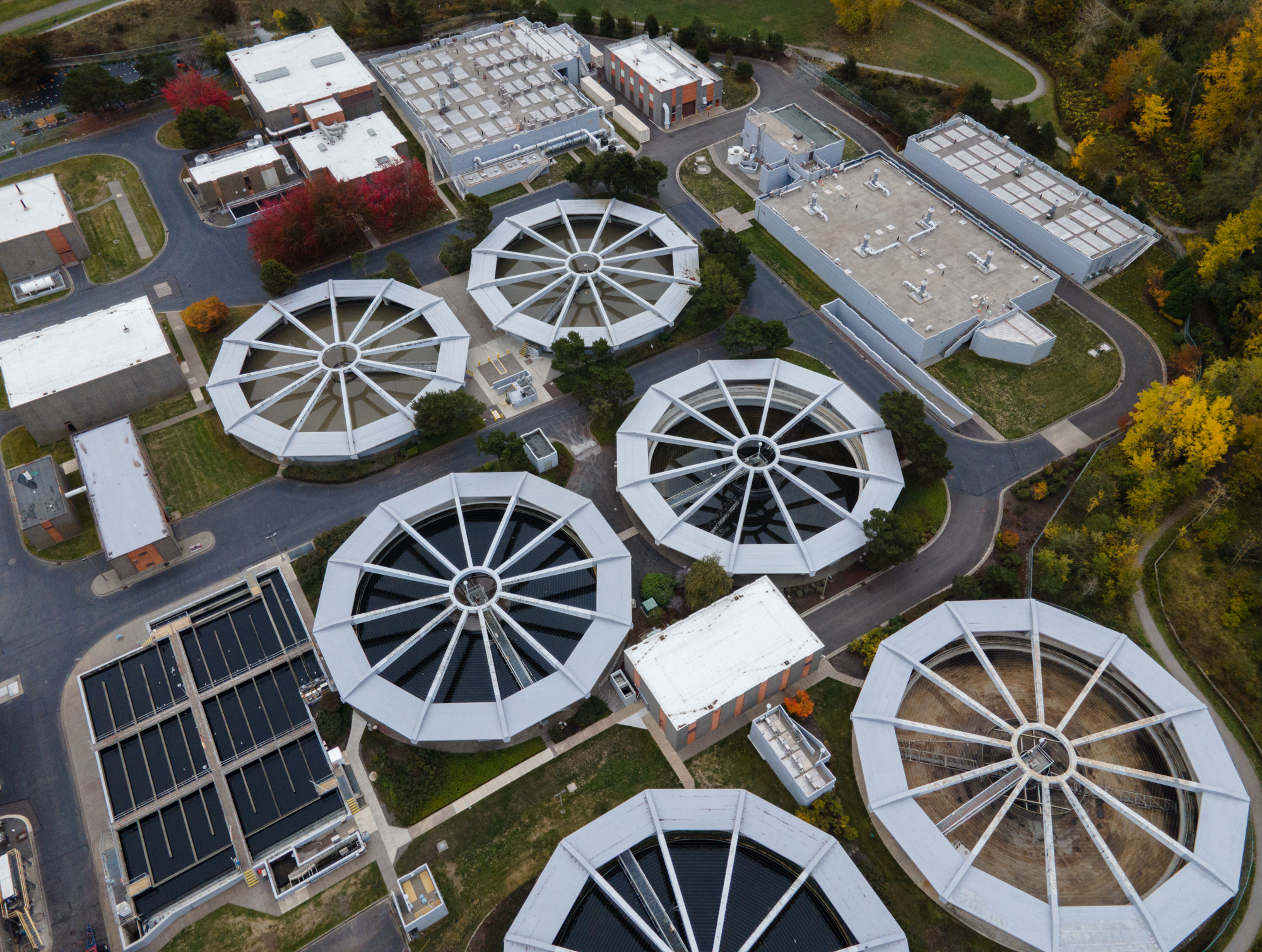
The City of Bellingham made the right call years ago when it stopped spreading treated sewage sludge onto farmland. The reason was straightforward: the sludge contains PFAS, the synthetic "forever chemicals" that do not break down in the environment and can leach into soil, crops, and drinking water. City officials looked at the science and acted. What happened next, critics say, is the problem.
Instead of eliminating the PFAS risk, the city shifted it. Bellingham now burns its sewage sludge at the Post Point Resource Recovery Plant on the south shore of Bellingham Bay. A guest commentary published Sunday in Cascadia Daily News, written by Larry McCarter, argues that incineration does not destroy PFAS and that the city is simply moving the contamination from the ground to the air, the scrubber water, and the ash.
What the Science Says About Burning PFAS
PFAS, short for per- and polyfluoroalkyl substances, are a class of thousands of synthetic compounds used in nonstick coatings, firefighting foam, food packaging, and many other products. Because they resist heat, water, and oil, they also resist breaking down once released into the environment. They have been linked to cancer, thyroid disruption, and immune system effects in humans.
The core of McCarter's argument rests on the engineering behind Post Point's incinerators. The plant uses multiple-hearth furnaces, a decades-old technology in which sludge passes through a series of stacked chambers at high temperatures. The city's own consulting engineer has published peer-reviewed research showing that multiple-hearth furnaces do not fully destroy PFAS compounds, McCarter writes.
When the federal government released its draft national assessment of PFAS in sewage sludge, it evaluated risks from land application and landfill disposal but did not quantify the risk from incineration. The reason, according to McCarter: the data needed to demonstrate that burning destroys PFAS simply does not exist. The U.S. Environmental Protection Agency continues to study the question.
The practical result, McCarter argues, is that the very chemical the city says it is protecting residents from is being dispersed through the incinerator stack into the air, through scrubber water that drains toward Bellingham Bay, and into the remaining ash. A landfill, he writes, would contain PFAS. The furnace does not.
h2>The Money Side of the EquationMcCarter's piece is titled "spreading PFAS and burning money" for a reason. Post Point's incinerators are aging infrastructure, and the cost of operating them falls on Bellingham ratepayers through sewer bills. The commentary calls on the city to shut down the incinerators and switch to landfilling the sludge while it studies longer-term alternatives.
Landfilling is not a perfect solution either. PFAS in landfilled sludge can leach into groundwater if the landfill liner fails, which is why the city moved away from land application in the first place. But proponents of the switch argue that a modern lined landfill with leachate collection systems is a more contained and better-understood risk than dispersing PFAS into the air over a populated coastal city.
The debate over sewage sludge disposal has intensified nationally as PFAS regulations tighten. The EPA in recent years set enforceable maximum contaminant levels for several PFAS compounds in drinking water, and states including Maine have restricted land application of sludge outright. Washington has been moving more cautiously, but the regulatory landscape is shifting quickly enough that decisions made today about Post Point will have long-term financial and legal consequences for Bellingham.
Why Post Point Is at the Center of the Conversation
Post Point Resource Recovery Plant sits on the Bellingham waterfront near the southern end of Bellingham Bay. It handles wastewater from the city's sewer system, processing millions of gallons daily. The sludge left over after treatment, technically called biosolids, is the material at the center of the PFAS controversy.
For years, treated biosolids were a sought-after fertilizer supplement for farms across Whatcom County and beyond. The practice was common nationally and encouraged by federal guidance as a way to recycle nutrients and reduce landfill volume. The discovery of widespread PFAS contamination in biosolids changed that calculus almost overnight. Studies found that PFAS applied to fields accumulated in crops and showed up in the blood of farm families. Bellingham's decision to halt land application put it ahead of many other jurisdictions.
What the city chose instead, continued incineration, was not a new policy shift. Post Point has burned sludge for decades. The shift was that incineration became the only remaining disposal pathway once land application was ruled out, and the questions about whether burning adequately handles PFAS were not fully resolved before the city committed to that path.
Community members pressing the city to reconsider point to the physical location of the plant. Post Point sits at the edge of Bellingham Bay, a body of water already carrying a legacy contamination burden from decades of industrial activity at the Georgia-Pacific site to the north. The bay is part of the broader Salish Sea ecosystem, home to chinook salmon runs that support the Southern Resident orca population. Advocates for the orcas and salmon have repeatedly raised water quality in Bellingham Bay as a concern.
What Bellingham Residents and Officials Should Watch For
McCarter's commentary does not represent an official city policy proposal. It is a public argument aimed at prompting the Bellingham City Council and city staff to reconsider the current approach. The city has not announced any imminent changes to Post Point operations.
What residents can watch for is whether the commentary generates a formal response from the city's Public Works department or prompts a council discussion. Bellingham's capital planning for Post Point has been ongoing, and any shift in disposal strategy would require environmental review, procurement for alternative disposal contracts, and likely a rate analysis showing how costs would change for sewer customers.
The argument for switching to landfill while studying better options is essentially a precautionary one: stop the most uncertain form of dispersal while the science catches up. Whether the city council finds that argument compelling enough to act on is a question that will play out in coming months.
Residents who want to weigh in can attend Bellingham City Council meetings, which are held at City Hall and typically include public comment periods. More information about Post Point and the city's wastewater program is available through the city's Public Works department. For background on PFAS in biosolids nationally, the EPA maintains a dedicated resource page with the latest research and regulatory guidance. Earlier coverage of water quality issues affecting Bellingham Bay and the surrounding watershed has looked at declining river flows and their effects on local salmon.