Summer weekends in Whatcom County often mean dirty cars, and this weekend is no exception. But before you drag out the hose and bucket, Whatcom County Public Works wants residents to know that where and how you wash your car matters more than you might think.
The problem is not the soap or the dirt itself. It is where all that soapy, contaminated runoff goes. When you wash your car on a paved driveway or street, the water picks up road grime, motor oil residue, brake dust, and detergent chemicals before flowing directly into storm drains. Unlike household wastewater, storm drain water is not treated before it reaches local rivers, creeks, lakes, and Bellingham Bay.
Why Soapy Runoff Harms Local Water
Whatcom County is home to some of the most ecologically sensitive waterways in Washington state. The Nooksack River, Squalicum Creek, Whatcom Creek, and dozens of smaller tributaries drain into Bellingham Bay, which feeds into the Salish Sea. These waters support salmon runs, shellfish beds, and wildlife habitat that residents and tribes have depended on for generations.
Even biodegradable soap contains surfactants that disrupt the protective mucous layer on fish skin and gills. Phosphates in many detergents can trigger algae blooms that deplete oxygen and harm aquatic life. The Washington State Department of Ecology has issued drought conditions for Whatcom County as of April 8, 2026, meaning stream flows are already lower than normal, concentrating any pollutants that do enter the water.
A Whatcom County Stage 2 burn ban has been in place since July 17 due to dry conditions, a reminder of how stressed the regional environment already is this summer. Adding avoidable chemical runoff to stressed waterways only compounds the problem.
The Best Option: Commercial Car Washes
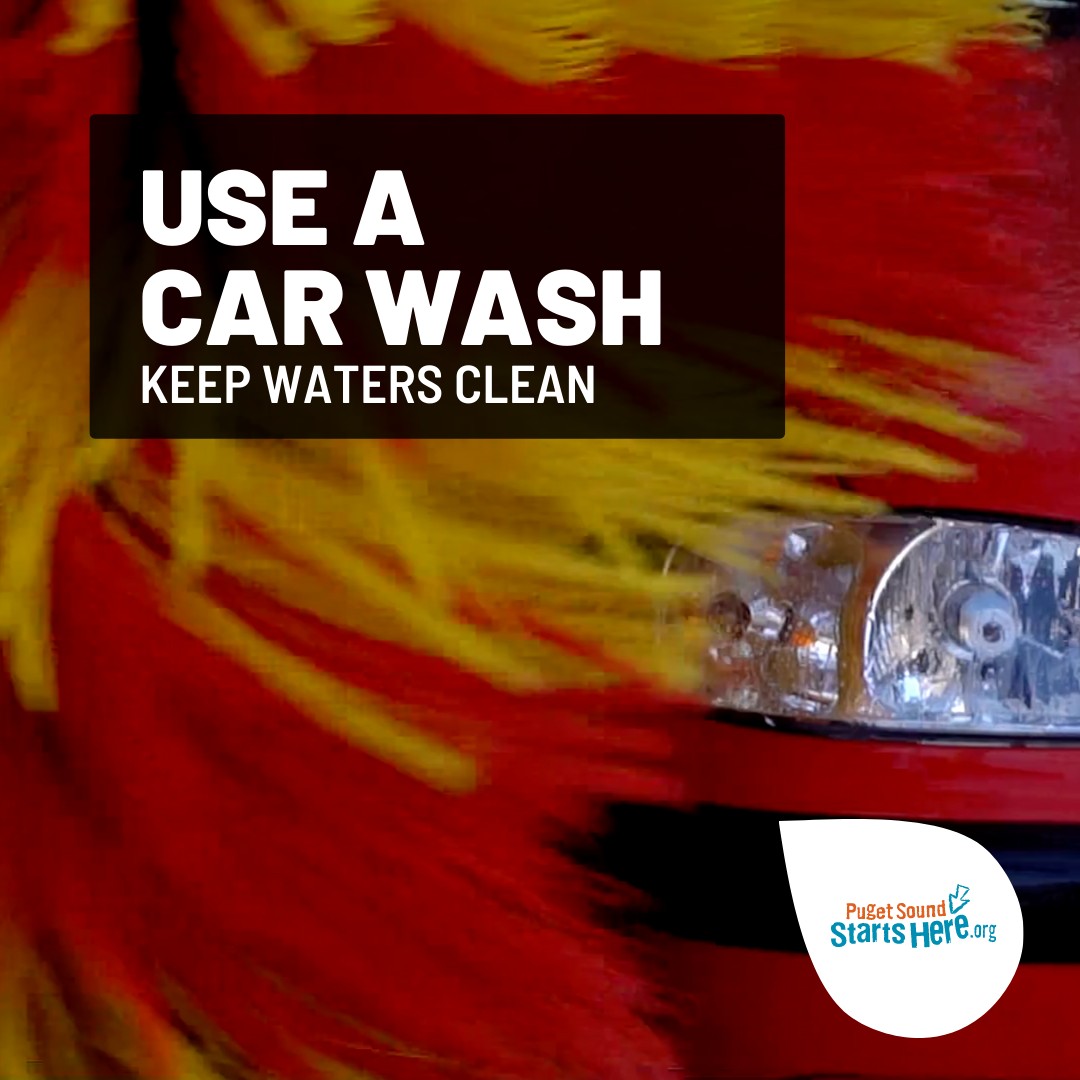
Whatcom County Public Works recommends commercial car washes as the cleanest option for your vehicle and for local water quality. Here is why: commercial facilities are required by law to capture and treat their wash water before it enters the sewer system. Most modern car washes also recycle a significant portion of their rinse water, reducing total water use compared to a home wash.
Bellingham and the surrounding communities have numerous commercial car wash options. Using one this weekend keeps dirty water out of storm drains entirely, which is the single most effective thing a driver can do to protect local waterways from vehicle-related pollution.
If you prefer to wash at home, Public Works offers a practical alternative: do it on a permeable surface. Washing over grass, gravel, or a vegetated area allows the ground to naturally filter and absorb the runoff before it reaches any drainage system. Soil acts as a biological filter, breaking down many of the chemical compounds in soap before they can reach groundwater or surface water.
Simple Tips for Home Washing
For residents who cannot easily reach a commercial car wash or who prefer to do it themselves, Public Works suggests these steps to reduce the impact on Whatcom County waterways:
Move your car onto a lawn or gravel area before washing, not onto the street or a concrete driveway. Use the smallest amount of soap necessary and choose phosphate-free or biodegradable products when possible. Empty your wash bucket into a sink or toilet when you are done, rather than onto the pavement or into a storm drain. Avoid washing near storm drains, gutters, or culverts that lead directly to creeks or ditches.
Even small behavioral changes can have a measurable effect when many households adopt them. Whatcom County has more than 230,000 residents, and summer car-washing season generates a notable spike in storm drain pollution at the same time of year when salmon are most vulnerable to low-flow, low-oxygen conditions in local streams.
Why It Matters This Summer
The timing of this reminder is not coincidental. Whatcom County is in the middle of a Stage 2 burn ban, a statewide drought declaration, and an active wildfire season in the east county Cascades. The regional environment is under unusual stress, and water quality in lowland streams is directly tied to how residents behave on summer weekends.
The Washington State Department of Ecology stormwater program tracks pollutants entering Puget Sound through urban runoff, and vehicle washing has been identified as one of the most common sources of household-generated storm drain contamination. Local data from the Northwest Clean Air Agency, which covers Whatcom and Skagit counties, also connects air quality and particulate matter to the kinds of debris washed off vehicles into drainage systems.
Residents who want to do more for local water quality can also sign up for the WhatcomReady emergency alert system to receive notifications about water quality advisories, burn bans, and environmental conditions affecting the county. More information on protecting Whatcom County waterways from common household pollution sources is available through the county Public Works department.
The good news: the fix is simple, free, and takes about thirty seconds of planning before your next car wash weekend.