A new analysis published in the Salish Current warns that salmon in the Nooksack River watershed face an increasingly dire future unless leaders dramatically accelerate efforts to address shrinking summer streamflows. The essay, written as a Community Voices piece, draws on six decades of U.S. Geological Survey streamflow data to document a pattern that the author describes as a "stunning loss" of water that underpins fish survival across the entire watershed.
What the Streamflow Data Shows
Summer streamflow in the mainstem Nooksack River at Ferndale has been declining for the past 60 years, according to USGS streamflow records. Over the full six-decade period, flows decreased at an average rate of 0.6 percent per year. But the pace has accelerated sharply in the most recent 15 years, with flows dropping at 4 percent per year, roughly five to seven times faster than the historical average.
Looking at the decade-over-decade comparison, flows across the mainstem Nooksack, the North Fork, Middle Fork, South Fork, and Fishtrap Creek declined by 20 to nearly 40 percent between the period of 2006 to 2015 and the following decade of 2016 to 2025. The Washington State Department of Ecology described that drop as a "stunning loss of streamflow," language that appears in state-level assessments of the watershed's condition.
Summer is the most consequential season for these trends. That is when flows are lowest, water temperatures are highest, and human demand is greatest, primarily from agricultural irrigation in the Nooksack Valley and the Lynden-area farming communities that depend on the river system for crop production. Low flows contribute directly to elevated water temperatures, which can be lethal for salmon. They also reduce dissolved oxygen levels, shrink available habitat, and block fish from reaching spawning grounds upstream. All three of those effects compound one another, making low-flow summers a multiple-front threat to fish survival.
Three Factors Driving the Crisis
The analysis identifies three primary drivers of the declining flows. First, climate change is reducing snowpack across the North Cascades, shrinking the glaciers that historically released meltwater into the river system through the summer months. Earlier snowmelt means the spring pulse of cold, clear water arrives before summer demand peaks and then recedes, leaving rivers without their traditional late-summer buffer. Higher summer temperatures accelerate evaporation and increase the water stress on vegetation, further reducing what returns to the river system.
Second, land use management across the watershed plays a role. Forestry, farming, and urban development all alter how water moves through the landscape, affecting infiltration, runoff timing, and the overall water budget of the basin. Third, and perhaps most urgently, the pace at which agencies are implementing projects to increase water supply and storage has been inadequate relative to the scale of the problem.
The Washington State Department of Ecology, Whatcom County, and the Watershed Management Board are the key governance bodies responsible for addressing water supply issues in the Nooksack. The essay credits their staffs as dedicated and hardworking but argues that actual project implementation remains far too limited to offset the trajectory shown in the data.
The Cost and Scale of Potential Solutions
The most sobering section of the analysis addresses the gap between what might be done and what can realistically be paid for. A recent engineering study of water storage projects across the watershed found a wide range of options, with less expensive projects providing only modest increases in summer flow. Two small storage projects identified on the South Fork might together increase summer streamflow on that fork by 6 percent, which translates to less than 1 percent of mainstem flow. Additional studies of those sites were conducted, and another is proposed for 2027, though whether they will be built remains unknown.
At the other end of the cost spectrum, a dam on the North Fork Nooksack River could provide 36,000 acre-feet of additional summer water supply, a volume large enough to make a substantial difference in river flows. The estimated price tag is $2.6 billion in construction costs plus $3.6 million per year in operating expenses. No identified public funding source comes close to that figure. Federal, state, and local governments are all facing budget constraints, and the multi-decade timeline for planning, permitting, and constructing such a project raises the question of whether the work could be completed before summer flows fall to levels incompatible with salmon survival.
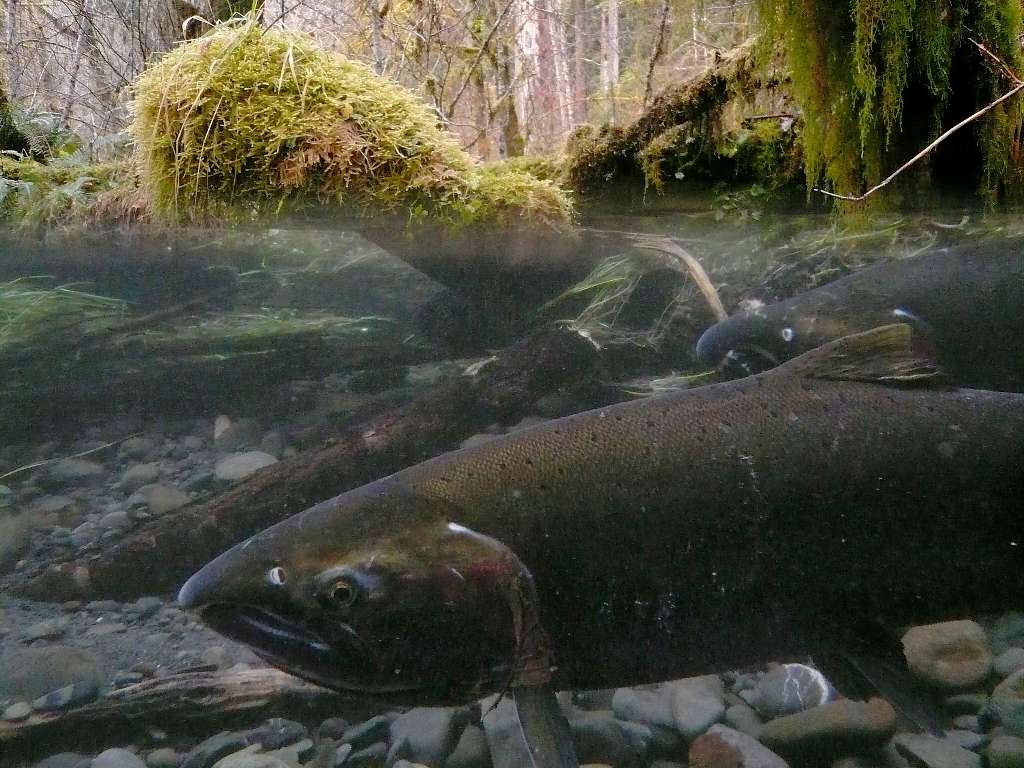
The author, who shared a draft with a dozen colleagues and received broad agreement on the core findings, poses the question directly: has time run out for Nooksack salmon? The Nooksack watershed supports multiple salmon species, including Chinook, coho, and steelhead, all of which are listed under state or federal endangered species protections. The Lummi Nation and Nooksack Tribe hold treaty fishing rights tied to healthy salmon runs in this watershed. The stakes of getting the water management question wrong extend well beyond wildlife conservation into cultural, legal, and economic realms that touch the entire Whatcom County community.
For residents who want to follow the ongoing policy discussions around Nooksack water management, the Whatcom County Watershed Management Board holds public meetings and maintains information through the county's website. The full essay is available at Salish Current, which regularly covers environmental and civic issues across the broader Salish Sea region. The questions it raises about salmon, water, and the pace of decision-making in Whatcom County are ones every resident of the Nooksack Valley has a stake in.