In Whatcom County, roughly one in three farmers is a first-generation producer, meaning they did not inherit land, equipment, family connections, or a built-in customer base. They are starting from zero, doing the physical labor of farmworkers while simultaneously managing the paperwork, marketing, buyer relationships, and financial planning of a small business. For many, the margin between staying and quitting is razor-thin.
Three of those farmers, Eden Lopez Paramo, Sonia Morales, and Amelia Pichardo, are doing the work right now, selling at farmers markets in Bellingham and Seattle, growing fruits and vegetables on rented land, and navigating a system that was largely built for people who already own their ground. Their stories reflect a broader pattern that agricultural economists say disproportionately burdens beginning, new, and underrepresented farmers across Washington State.
The Land Problem: Growing Without Owning
For Paramo and Pichardo, not owning land is the single largest barrier to building a sustainable farm. Paramo has operated Eden's Wonderful Garden for three years on 10 rented acres in Whatcom County, growing berries, tomatoes, leafy greens, and other fruits and vegetables. During his first two years, the farm could not generate enough income to cover his household bills, so he worked part time off the farm to make ends meet while simultaneously building the operation from scratch.
Rented farmland creates a compounding problem: without ownership, farmers cannot take out long-term loans against the property, cannot make permanent infrastructure improvements that would pay off over decades, and cannot build the kind of equity that eventually becomes a safety net. Every year is effectively a new negotiation with a landlord whose priorities may not align with the farmer's plans.
Whatcom County's agricultural land, particularly the fertile lowland acres in the Nooksack River valley and the flats around Lynden, Ferndale, and Everson, has been held by multigenerational farm families for decades. Entry-level purchase prices for agricultural parcels in the county routinely run into the hundreds of thousands or millions of dollars, far out of reach for farmers who are simultaneously trying to keep a new business solvent. The result is a two-tiered system where established family farms can expand and invest while first-generation producers remain perpetually one bad season away from losing their footing.
Madison Roy, an agricultural economist with the Washington State Department of Agriculture, confirmed that the challenges facing first-generation farmers are both real and documented. "We recognize that a lot of the challenges that are occurring do adversely and disproportionately affect beginning, new underrepresented farmers," Roy said.
Language, Technology, and Finding Buyers
For Paramo and Pichardo, who both operate in a second language, the administrative side of farming carries additional friction. Loan applications, lease agreements, market vendor contracts, and regulatory compliance paperwork are almost exclusively available in English. Navigating those documents without fluency means either relying on bilingual intermediaries, risking misunderstandings on legally binding agreements, or both.
Technology presents a parallel challenge. Modern small-farm operations increasingly rely on digital tools for inventory tracking, online marketing, sales through platforms like online farmers market apps, and communication with wholesale buyers. For farmers who are still building English proficiency or who come from backgrounds without significant exposure to digital tools, the learning curve is steep and the cost of mistakes is high.
Finding reliable buyers is another persistent obstacle. Established farms in Whatcom County often have decades-long relationships with grocery co-ops, restaurant buyers, and food distributors. First-generation producers typically start at the bottom of those networks, selling at farmers markets, building a reputation from scratch, and hoping that a few good seasons will open doors to more stable wholesale accounts. The Bellingham Farmers Market is a key venue for producers like Paramo, who loads up his truck on Saturdays and drives to both Bellingham and Seattle markets to maximize his sales volume. But market fees, travel time, and the physical demands of market days add costs and labor hours that cut into already thin margins.
Seasonality and the Financial Squeeze
Farming in the Pacific Northwest is inherently seasonal, and for first-generation farmers without significant cash reserves, the gap between growing seasons can be financially dangerous. Whatcom County's climate allows for a productive growing season from roughly May through October, but fixed costs including rent, equipment maintenance, and utilities continue year-round. Producers who have not built up savings from prior seasons, or who faced an unexpected loss from weather, pest pressure, or unsold inventory, enter the off-season in a vulnerable position.
Unsold produce is a particularly acute problem. When a market day is slow or a buyer cancels an order, perishable crops that took weeks to grow become a total loss within days. First-generation farmers, who are still calibrating production volume and market demand, are especially prone to overproduction in some crops and underproduction in others, a cycle that is expensive to correct and difficult to predict.
Washington State does offer some programs aimed at beginning and underrepresented farmers. The state agriculture department runs technical assistance programs, and organizations like WSU Extension's Small Farms Program provide education on farm planning, market access, and financial management. But navigating those resources, again, often requires language access and digital literacy that not all first-generation producers have.
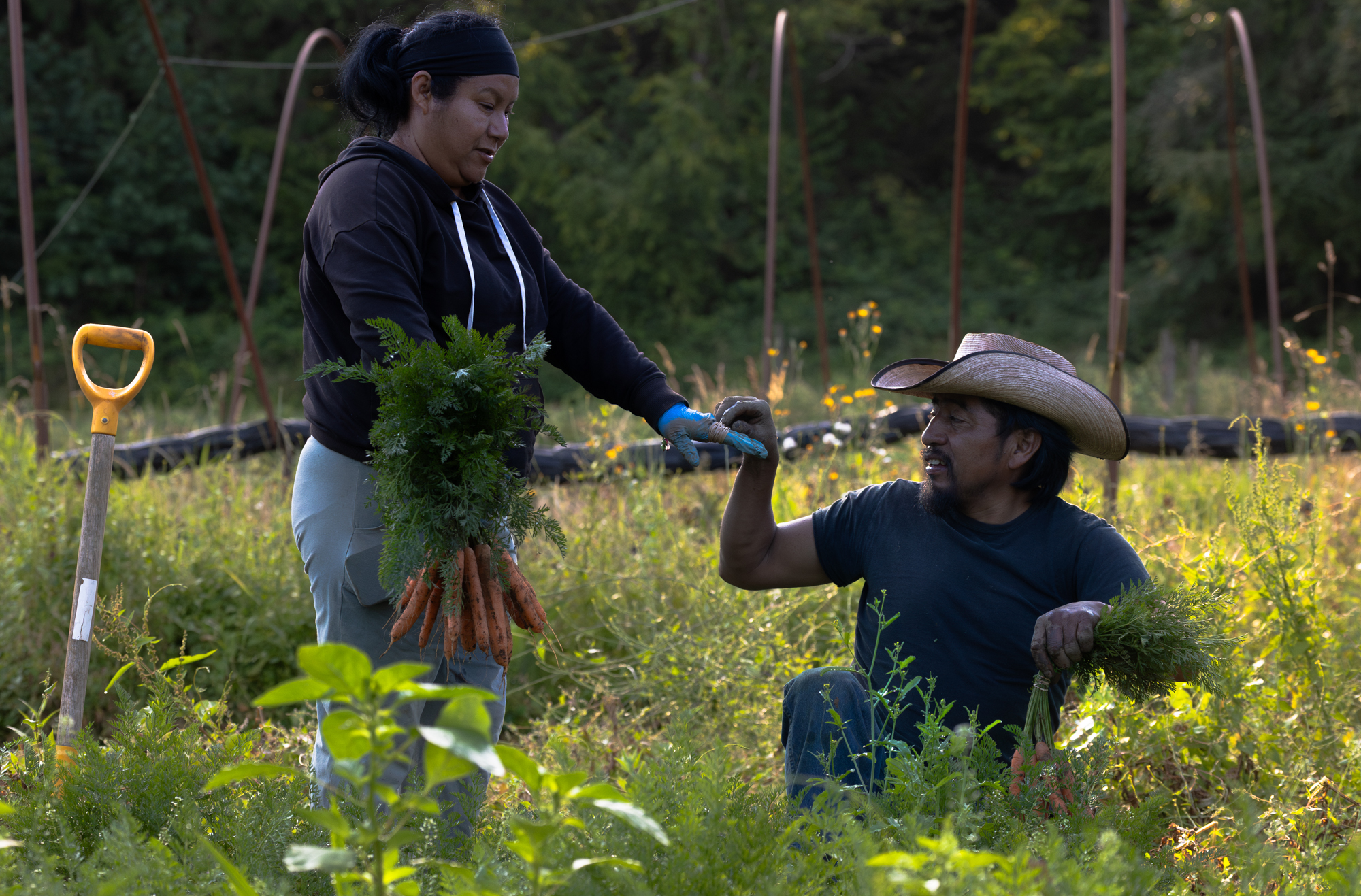
For Paramo and his wife Sonia Morales, the daily reality is bundling carrots in the early morning, loading the truck, and heading to market, week after week, building a customer base one transaction at a time. It is the same work that multigenerational farm families in Whatcom County did generations ago, with one critical difference: those families now own the land their grandchildren farm. For first-generation producers, that kind of security is still a goal rather than a given. More context on the farmers market ecosystem where many of these growers sell their produce offers additional background on who shows up at the market and what it takes to get there.