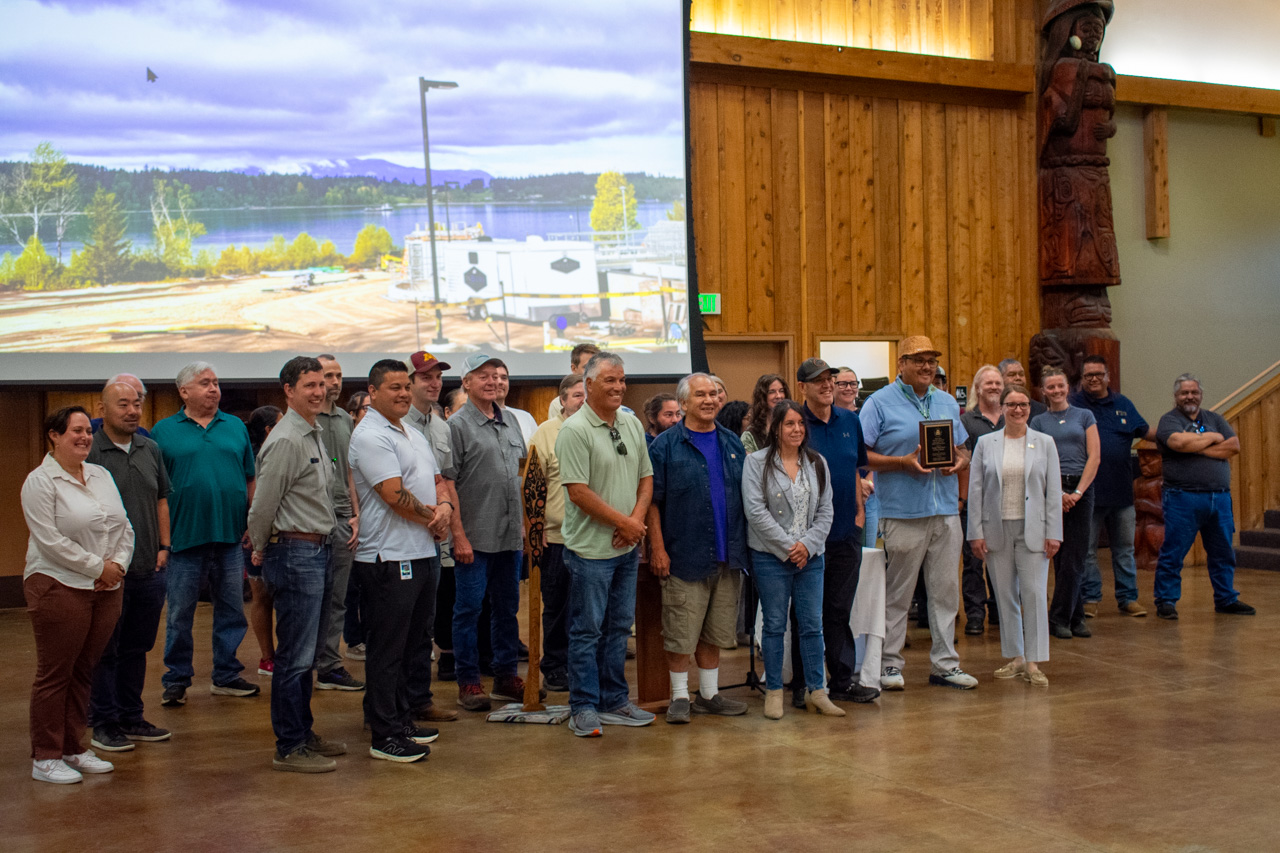
The Lummi Tribal Sewer and Water District received a national award Tuesday, July 21, from the U.S. Environmental Protection Agency recognizing improvements to the Gooseberry Point Wastewater Treatment Plant. The award ceremony was held at the Wex'liem Community Hall on the Lummi Nation, with representatives from the EPA, the Washington State Department of Ecology, and the Lummi Indian Business Council in attendance.
What the Upgrade Involved
The Gooseberry Point plant, located on the Lummi Peninsula west of Bellingham near Hale Passage, serves the Lummi Nation community's sewer and water needs. Prior to a recent renovation, the facility's aging technology was underperforming in its core function. During high tides and significant weather events, partially treated effluent would back up into the plant's disinfection system, forcing operators to divert wastewater over land adjacent to Hale Passage.
That passage is critical habitat. It is an active shellfish harvest area, a salmon fishing ground, and a known feeding corridor for the southern resident orca pod, which is listed as an endangered species under the Endangered Species Act. Treated effluent that bypassed the disinfection system and reached the waterway posed a direct risk to all three of those resources and to the Lummi Nation's treaty-protected rights to harvest from those waters.
With a $15 million loan from the Clean Water State Revolving Fund, the facility underwent significant improvements, including upgrades to its activated sludge process, pump station enhancements, and new measures designed to handle extreme weather events without system failure. The result is a plant that now reliably meets its treatment standards regardless of tidal conditions, protecting the adjacent marine environment from pollution events that had previously been difficult to prevent.
What the EPA Recognition Means
The award comes through the EPA's PISCES program, which stands for Performance, Innovation, and Continuous improvement in the Stewardship of Environmental Systems. PISCES recognizes wastewater treatment plants across the country for exceptional project outcomes in environmental and public health protection. The Gooseberry Point plant was selected as one of five "Exceptional Projects" nationally from this year's pool of nominees, a highly competitive designation that places the Lummi Nation's facility among the best wastewater improvement projects in the United States.
EPA Region 10 Regional Administrator Emma Pokon presented the award to Lummi Indian Business Council Vice-Chair Terrence Adams at the ceremony. In remarks, Adams tied the project directly to the nation's values and obligations. "This project reflects the Nation's commitment to protecting our people and our natural resources. Clean water is essential to public health in our environment and in our way of life," Adams said. "Protecting our water also protects the salmon, the shellfish, our treaty resources that have sustained our people for generations."
Members of the Blue Lightning Canoe Family performed a tribal song and dance at the ceremony, grounding the technical achievement in cultural continuity. The Lummi Nation's relationship to Hale Passage and its marine resources extends back far beyond the construction of any wastewater plant, and protecting those resources is inseparable from the nation's identity and legal rights.
Why This Matters for Whatcom County
The Lummi Peninsula sits west of Bellingham across Bellingham Bay, connected to the mainland by a road corridor through Ferndale and the Guide Meridian. The Lummi Nation is the largest tribe in Whatcom County by population and is one of the largest landowners in the region, with significant influence over marine resource management across a wide geographic area.
Hale Passage, which separates the Lummi Peninsula from Lummi Island, is one of the most productive shellfish environments in the Salish Sea. Commercial and subsistence shellfish harvesting by Lummi tribal members depends on water quality standards that the upgraded treatment plant is now better equipped to maintain. Closures triggered by wastewater-related contamination have real economic and cultural costs that the community has worked for decades to reduce.
The Lummi Nation has invested significantly in environmental stewardship, including habitat restoration, salmon hatchery operations, and tribal fisheries management programs that benefit the broader ecosystem shared by tribal and non-tribal users alike. The wastewater plant upgrade is one of the most concrete and measurable expressions of that commitment, removing a chronic source of marine pollution that had persisted for years due to the limitations of aging infrastructure.
The EPA's recognition also highlights the role of the Clean Water State Revolving Fund in enabling tribal infrastructure investment. That fund, administered in Washington by the Department of Ecology, provides low-interest loans for water quality improvement projects and has been an important financing tool for smaller and tribal utilities that might not otherwise have access to capital markets for large infrastructure upgrades. More information about the PISCES program and past award recipients is available through the U.S. Environmental Protection Agency. For related local environmental coverage, see earlier reporting on the Bellingham Bay cleanup milestone.