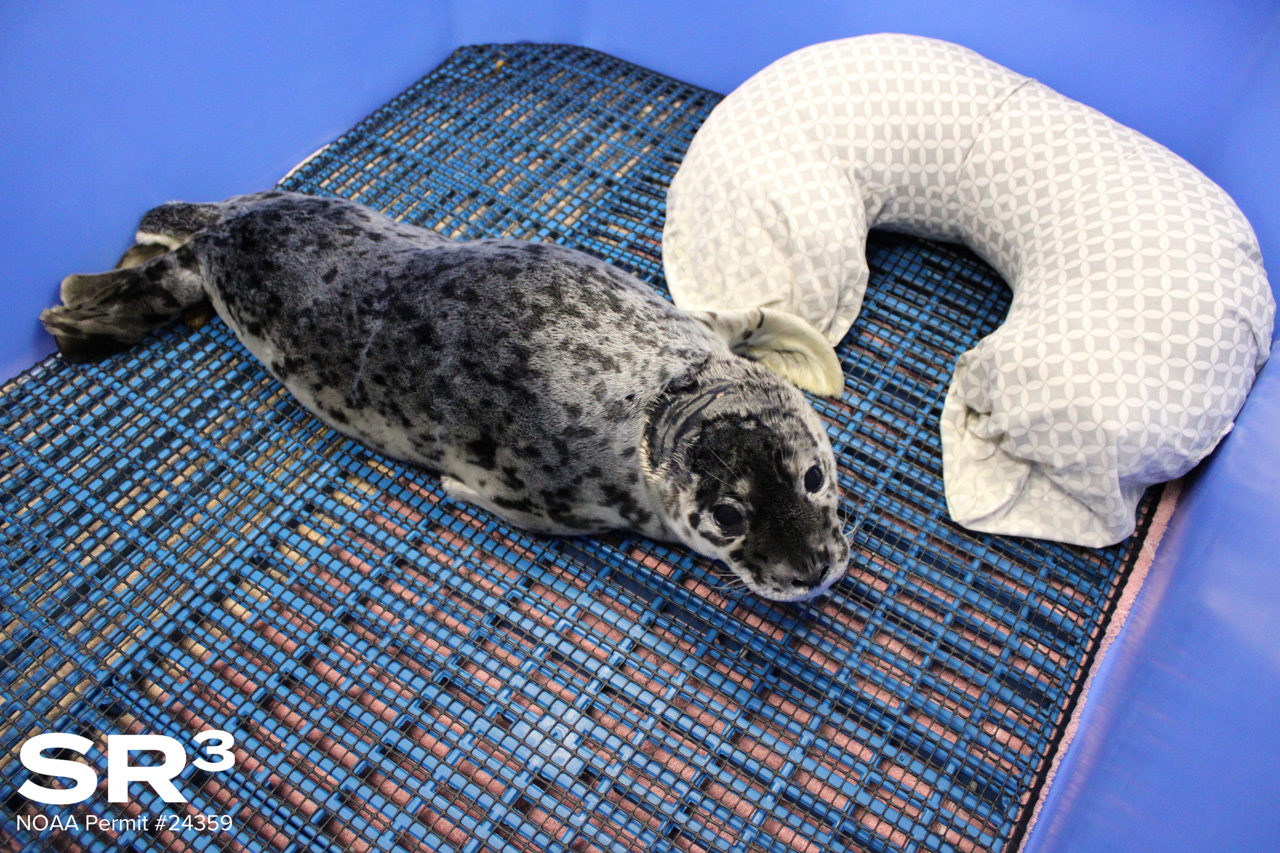
A harbor seal pup found with a head wound in the tidal flats near the Bellingham International Airport over the Fourth of July weekend has been euthanized after veterinary imaging revealed a BB pellet lodged in its brain tissue. The case marks the first time the regional marine mammal response team has treated a harbor seal pup for a gunshot wound, and the third seal overall in 2026 to be injured by gunfire in the Bellingham area, a pattern that wildlife officials and rehabilitators describe as deeply troubling.
How the Pup Was Found and What Exams Revealed
The pup was discovered in the Smith Gardens tidal flats, a marshy coastal area near the Bellingham International Airport along Bellingham Bay. The location is part of the broader intertidal zone that harbor seals regularly use for hauling out to rest, and its proximity to the airport and surrounding industrial and residential areas means it sits in a zone where human activity and wildlife habitat overlap. The Whatcom Humane Society responded to the scene and transported the animal before handing it off to SeaLife Response, Rehabilitation and Research, known as SR3, the Des Moines-based nonprofit that provides marine mammal rescue and rehabilitation services for the Pacific Northwest coast.
At SR3's rescue center in Des Moines, staff performed a CT scan that showed a BB pellet made of soft lead had penetrated the pup's skull and become embedded in brain tissue. The imaging left no ambiguity about the cause of injury or the prognosis. SR3 Executive Director Casey Mclean said there was no hope of recovery given the location and nature of the injury. The pup was humanely euthanized. The use of a CT scan to diagnose the injury reflects SR3's capacity to provide hospital-grade diagnostic imaging for marine mammals, a capability that allows the organization to make well-informed triage decisions rather than relying solely on external examination of injuries that may not reveal their full extent without imaging.
"This is the third seal that SR3 has treated for a gunshot wound this year," Mclean said. The other two instances both involved adult seals that also did not survive their injuries. All three cases involved animals that died as a result of being shot, making 2026 an unusually deadly year for pinnipeds in the Bellingham area. The pup is the first juvenile seal the organization has ever treated for a gunshot wound in its entire history of responding to marine mammal strandings across the Pacific Northwest, a fact that underscores the severity and the novelty of this particular case.
The Bigger Picture: A Pattern of Seal Shootings
SR3's research database tracks reported cases of pinnipeds, the scientific grouping that includes seals and sea lions, being shot along the U.S. coastline. According to Mclean, there have been 85 documented cases in the national database since 2021, a number she described as troubling. The fact that three of those cases occurred in the Bellingham area within a single calendar year suggests a localized pattern that warrants serious attention from law enforcement, wildlife managers, and the broader community. Three incidents in one region in one year is not statistical noise; it is a signal that something specific is happening in Whatcom County's coastal waters and tidal zones that needs to be addressed.
Shooting a harbor seal is a federal crime. Under the Marine Mammal Protection Act, it is illegal to harass, hunt, capture, or kill any marine mammal in U.S. waters or on U.S. land without a specific federal permit. Violations carry civil penalties of up to $11,000 per count and potential criminal penalties including fines and imprisonment. The law has been in place since 1972 and was enacted specifically in response to declining marine mammal populations caused by hunting, harassment, and incidental take in fisheries. It applies to all pinnipeds including harbor seals, which are one of the most common marine mammals along the Whatcom County shoreline and a species that was historically subject to legal culling by fishermen who viewed them as competitors before the law changed that practice.
Harbor seals are a regular and visible presence in Bellingham Bay, Lummi Bay, and along the Whatcom County coastline throughout the year. They haul out on exposed rocks, log booms, and tidal flats to rest and regulate their body temperature, and they are frequently visible from Bellingham's Boulevard Park, the Fairhaven waterfront, and Squalicum Harbor. Pups are born in late spring and early summer and are sometimes found resting alone on beaches while their mothers forage offshore, a behavior that can lead people unfamiliar with seal biology to assume the pup has been abandoned and to approach or attempt to intervene. In most cases, a pup resting alone is waiting for its mother to return and is best left completely undisturbed.
What to Do If You Find a Stranded Seal
If you find a seal, sea lion, or other marine mammal that appears injured, stranded, or in distress along the Whatcom County shoreline, the correct response is to keep people and pets at a distance of at least 100 yards and call the NOAA Marine Mammal Stranding Hotline at 1-866-767-6114. Do not attempt to touch, move, pour water on, or return the animal to the water. Interfering with a resting or injured seal, even with good intentions, causes additional stress that can worsen outcomes and may expose the person interfering to both physical risk from the animal and legal liability under the Marine Mammal Protection Act, which prohibits harassment regardless of intent.
SR3 coordinates marine mammal response across Washington, Oregon, and Idaho and can dispatch trained responders to assess stranded animals and determine whether intervention is needed. The organization also accepts reports of suspected violations of the Marine Mammal Protection Act, which can be forwarded to NOAA's Office of Law Enforcement for investigation. Timely reporting of suspicious activity near seal haul-out sites, including the presence of individuals with firearms or air rifles near tidal flats, can help law enforcement build the kind of case needed to identify and prosecute whoever is responsible for this year's shootings.
Anyone with information about who may have shot the seal pup found near the Bellingham Airport, or who may be responsible for either of the two adult seal shootings earlier in 2026, is encouraged to contact the NOAA Office of Law Enforcement at 1-800-853-1964 or submit a tip online. Tips can be submitted anonymously. The Whatcom Humane Society, which initially responded to the pup's discovery in the Smith Gardens tidal flats, can also be reached for questions about local wildlife welfare at 360-733-2080.