Three rivers within easy reach of Bellingham offer whitewater rafting, floating, and guided kayak adventures this summer, each with its own character, difficulty level, and set of risks worth knowing before you book a trip. The Skagit, Nooksack, and Sauk rivers are all publicly accessible waterways, and several outfitters run guided trips that can be booked by first-timers and experienced paddlers alike.
The Skagit River: Best for Beginners
The Skagit River is the most accessible starting point for anyone new to whitewater. It is the third-largest river on the West Coast, trailing only the Columbia and Sacramento, and flows roughly 150 miles from the Cascade Mountains in British Columbia before emptying into Skagit Bay in Puget Sound. Three major hydroelectric dams on the main stem, Gorge Dam, Diablo Dam, and Ross Dam, are operated by Seattle City Light and slow the river's pace considerably compared to the raw mountain rivers further north. The regulated flow means the Skagit is the calmest of the three options and its behavior is more predictable day to day, which matters enormously when you are assessing conditions for a recreational float.
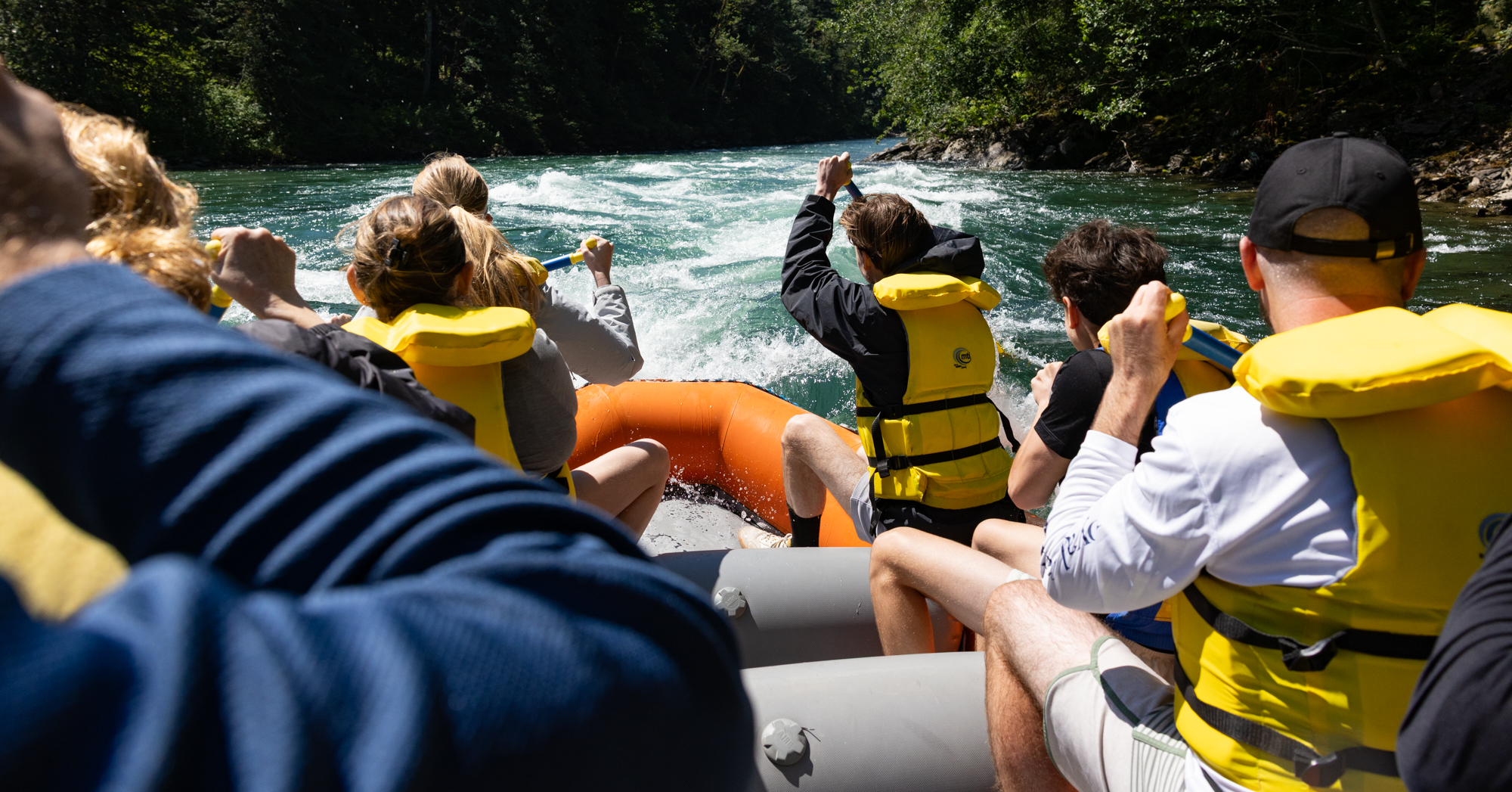
The crystal-clear water reveals multi-colored rocks on the riverbed, and the corridor is rich in wildlife. Blue herons, otters, osprey, and fish are regular sightings along the float route. The experience shifts between long calm stretches, where guides have time to talk about the river's ecology and history, and genuine whitewater rapids that generate the kind of adrenaline that makes the whole trip feel worthwhile. The contrast between the serene flat sections and the rapids is part of what makes the Skagit an ideal introduction: you get both the meditative and the thrilling without being overwhelmed.
The Skagit River's flow rate in early summer 2026 has been running at about 80 percent of the average for June, according to North Cascades National Park District Ranger James Paetsch, a result of recent floods and rainfall patterns in the upper watershed. Outfitters monitor flow readings continuously and adjust their routes and departure points based on current conditions, so the trip you experience may vary slightly from descriptions depending on when you go.
Alpine Adventures is one of the established outfitters running guided Skagit trips. Their guided float includes all safety gear, instruction, and a knowledgeable guide, making it genuinely accessible for people who have never been in a raft before. The company recommends wearing long sleeves and old sneakers rather than sandals, and bringing a change of dry clothes for afterward. Sandals can come off in moving water and leave feet unprotected against rocks, which is why closed-toe footwear is a consistent recommendation across all river outfitters in the region.
The Nooksack River: Closer to Home
The Nooksack River runs directly through the heart of Whatcom County, with its three forks draining the slopes of Mount Baker, Mount Shuksan, and the peaks above Glacier before converging near Deming and flowing west through Everson, Nooksack, and Ferndale to Bellingham Bay. The North Fork of the Nooksack in particular carries significant glacial melt through the summer months, which keeps water temperatures cold even on the hottest days of a heat advisory week like the current one. Cold water is not just a comfort issue: it accelerates the onset of cold shock and hypothermia if a swimmer ends up in the river unexpectedly, and this is a risk that applies regardless of air temperature.
Sections of the Nooksack offer guided float trips with varying levels of whitewater, depending on the time of year and current flow rates. The river's character changes significantly between spring runoff, when flows are high and powerful, and late summer, when levels drop and certain sections become too shallow for rafts. Water levels on the Nooksack can also change quickly based on rainfall or snowmelt higher in the watershed, so checking current conditions before any trip is essential. The National Weather Service Advanced Hydrologic Prediction Service tracks real-time gauge readings on the Nooksack at multiple points, including at Deming and at the USGS gauge near Ferndale, and outfitters use these readings to assess safety before launching groups.
The Sauk River and What to Know Before You Go
The Sauk River flows through Skagit County, joining the Skagit near Rockport after draining a steeper, less dammed watershed than the main Skagit stem. The absence of major dam regulation on the Sauk means its character is more dynamic and its rapids more demanding, with flow levels that respond more directly to precipitation and snowmelt higher in the Cascades. The Sauk is considered the most challenging of the three rivers for recreational floaters, and guided trips are strongly recommended for anyone without significant whitewater experience. The river's canyon sections include Class III and in some conditions Class IV rapids that require practiced paddling technique and reliable self-rescue skills if you are running them without a guide.
Across all three rivers, a few practical points apply regardless of which waterway you choose. Water temperatures in these Pacific Northwest rivers run cold even in midsummer, and cold water significantly increases the risk of hypothermia if you end up in the river unexpectedly. Wearing a properly fitted personal flotation device is required on guided trips and strongly recommended for independent floaters. The Discovery Pass is required for parking at Washington State Recreation Sites along several sections of these rivers. A Washington State Parks Discovery Pass costs $30 annually or $10 for a single day and covers parking at hundreds of state recreation sites. If you visit state parks more than three times a year, the annual pass pays for itself quickly.
Guided trip options vary in length and price. Half-day floats on the Skagit typically run two to three hours on the water and are appropriate for families with children. Full-day trips add time to explore additional sections of river and usually include a riverside lunch stop. Most outfitters supply all equipment including wetsuits, helmets, paddles, and life jackets, so the only gear you typically need to bring is sunscreen, a water bottle, and dry clothes for the drive home.
Summer is the primary season for guided river trips in the region, and popular dates on the Skagit tend to book out several weeks in advance, especially on weekends. If you are planning a late-summer outing in August or September, booking now rather than waiting is the practical move. River levels on all three waterways typically drop as summer advances and glacial contributions diminish, which can affect which sections are runnable and what the experience feels like. Outfitters adjust their routes accordingly and are the best source of current information on what each trip will look like in any given week of the season.