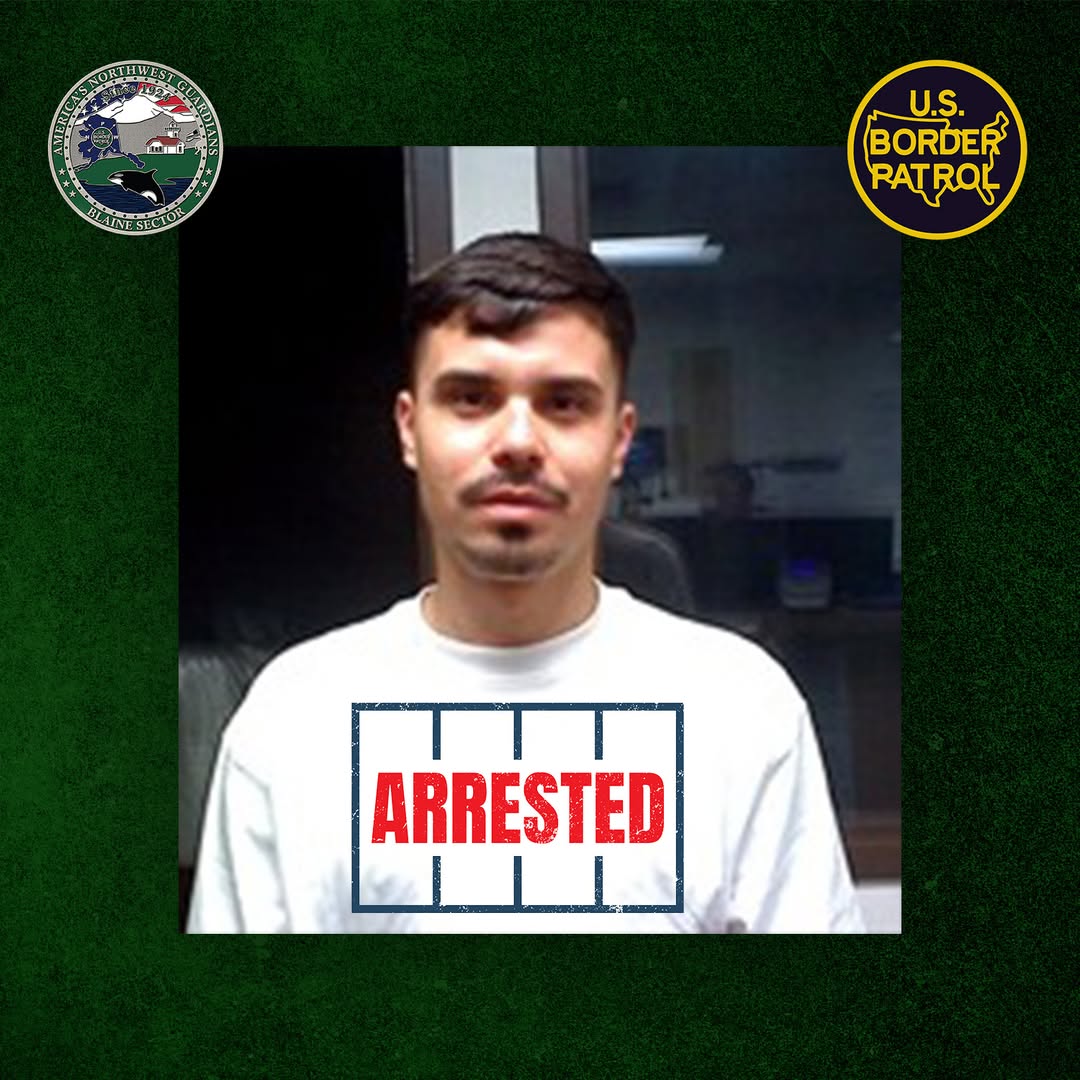
U.S. Border Patrol agents in Whatcom County apprehended a Romanian citizen who was illegally present in the United States near Blaine, Washington, the agency announced this week. The individual is now in federal custody awaiting removal proceedings.
The Blaine Sector of U.S. Customs and Border Protection covers the international boundary along the Pacific Northwest coastline and land border from the Pacific Ocean to the Idaho state line. Blaine sits at the primary I-5 port of entry connecting Washington State to British Columbia, making it one of the busiest legal crossing points on the northern U.S. border. The area also presents varied terrain for illegal crossings, including marine approaches via Birch Bay and Semiahmoo Bay, forested land between official ports of entry, and the complex of rural roads and farmland around the Sumas corridor to the east.
The Northern Border in Whatcom County
Apprehensions of nationals from countries outside Mexico and Canada along the northern border have reflected a diversifying migration pattern over recent years. Whatcom County's border zone has seen individuals from an increasingly broad range of countries as migration routes shift in response to enforcement patterns at the southern border, changing immigration policies in Canada, and global displacement pressures.
Romanian citizens occupy an interesting position in U.S. immigration law. Romania is a member of the European Union, and Romanian nationals can travel freely within the EU and to many countries without visas. However, Romania is not part of the U.S. Visa Waiver Program, meaning Romanian citizens require a valid nonimmigrant visa to enter the United States legally. Those apprehended near the northern border without valid documentation are subject to removal proceedings under standard immigration enforcement procedures.
The Blaine Sector U.S. Border Patrol regularly posts individual case announcements on public channels. The practice serves both a public information function and an operational signal to would-be border crossers that encounters with agents lead to detention and removal proceedings rather than successful entry. The sector's territory includes Whatcom County, San Juan County, Skagit County, and the northern portions of the Cascades.
What Removal Proceedings Involve
When a person is apprehended near the border without authorization to enter the United States, immigration officials initiate removal proceedings, a formal legal process conducted through the immigration court system. Individuals in proceedings have the right to appear before an immigration judge, present any legal claims to remain in the U.S. such as an asylum claim, and appeal adverse decisions.
Immigration court backlogs have grown substantially in recent years, and cases can take months or years to resolve depending on jurisdiction, the nature of any legal claims, and whether the individual has legal representation. During that period, the subject may be held in immigration detention or released on supervision depending on risk assessments. For individuals without strong legal claims to remain, the process typically ends in a removal order and deportation to the country of nationality.
A Consistent Pattern Along the Whatcom Border
The Blaine Sector has reported numerous apprehension cases in 2026, with individuals from Guatemala, Mexico, Tanzania, and now Romania among those encountered at the northern border this summer. Earlier this month, agents also marked Independence Day with a look back at operations across the sector, highlighting the breadth of enforcement activity in the Whatcom County corridor.
Local residents near Blaine, Birch Bay, and the Sumas corridor occasionally encounter increased law enforcement presence on rural roads and in maritime areas as part of routine patrol operations. The agency conducts vehicle patrols, maritime surveillance in the waters of Birch Bay and Semiahmoo Spit, and maintains enforcement presence along routes south of the border crossing. The Whatcom County border zone spans a mix of farmland, forest, and residential areas that require ongoing patrol coverage between the staffed ports of entry.
Community members who observe suspicious activity near the border are encouraged to report it directly to Border Patrol or by calling 911. The agency notes that community awareness is a key component of effective enforcement in a region where the physical boundary runs through farms, forests, and neighborhoods rather than easily monitored open terrain.