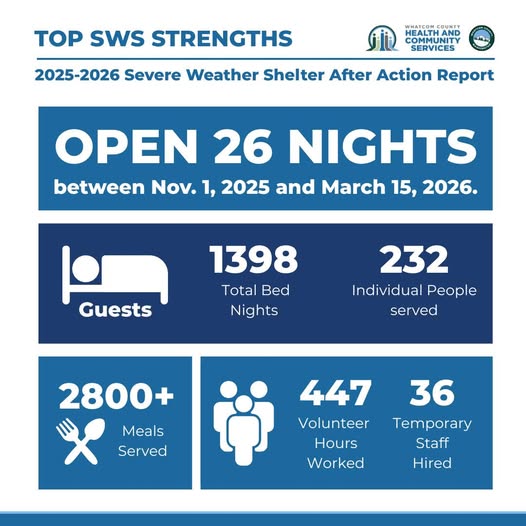
Whatcom County Health and Community Services has published an after action report on the county's severe weather shelter operations from last winter, offering a candid look at what worked, what didn't, and what comes next for the county's approach to sheltering unhoused residents during cold weather emergencies. The report was announced Thursday via the Whatcom County Government's social media, with links to both a public-facing newsflash summary and the full report document.
Severe weather shelters in Whatcom County operate on an on-call, activation-based model. Rather than maintaining a year-round facility, the county activates temporary shelter space when temperatures drop to dangerous levels, typically during cold snaps that could put unsheltered residents at risk of hypothermia. This model requires rapid coordination between county health staff, partner organizations, community volunteers, and food and supply donors, often with little advance notice.
The after action report highlights successes in building both new and existing partnerships throughout the winter. The county credited numerous community organizations, volunteers, and donors of food and warm clothing for making the shelter operations viable. County staff who worked night shifts at the shelter during cold events were also recognized for their dedication to ensuring that unhoused neighbors were warm and safe.
At the same time, the report acknowledges ongoing challenges with the temporary, on-call staffing model. Staffing a shelter that may activate with short notice is operationally difficult. Unlike permanent shelter facilities where staff can maintain consistent schedules, on-call models require a reliable pool of trained workers who can respond quickly. The county has identified this as an area requiring continued attention and improvement going into next winter.
Homelessness and housing instability remain significant issues in Whatcom County and throughout the greater Bellingham area. The Whatcom County Point-in-Time count, conducted annually, has documented hundreds of individuals experiencing homelessness in the region, including both sheltered and unsheltered residents. Severe weather shelter activations serve as an emergency safety net for those who are unsheltered or in inadequate housing during dangerous cold events.
The full report is available through the link shared in the county's newsflash. Community members interested in volunteering with or donating to severe weather shelter efforts can reach out to Whatcom County Health and Community Services for information on how to get involved before next winter's activation season. Volunteer engagement and supply donations are typically most needed during active shelter events, but the county also benefits from advance preparation and donor outreach in the fall.
The county said it continues to improve its winter severe weather shelter operations and thanked all involved in last season's efforts. For those who missed the direct reporting on this winter's shelter events, earlier coverage of Bellingham's community health response work offers additional context on how local agencies are coordinating services for vulnerable residents.
The release of this after action report reflects an organizational commitment to transparency and continuous improvement in the county's emergency social services. As housing costs continue to rise in Whatcom County and across the Pacific Northwest, the demand for emergency shelter services is unlikely to diminish. Residents who want to stay informed on county homelessness and shelter initiatives can follow updates from Whatcom County Health and Community Services throughout the year.