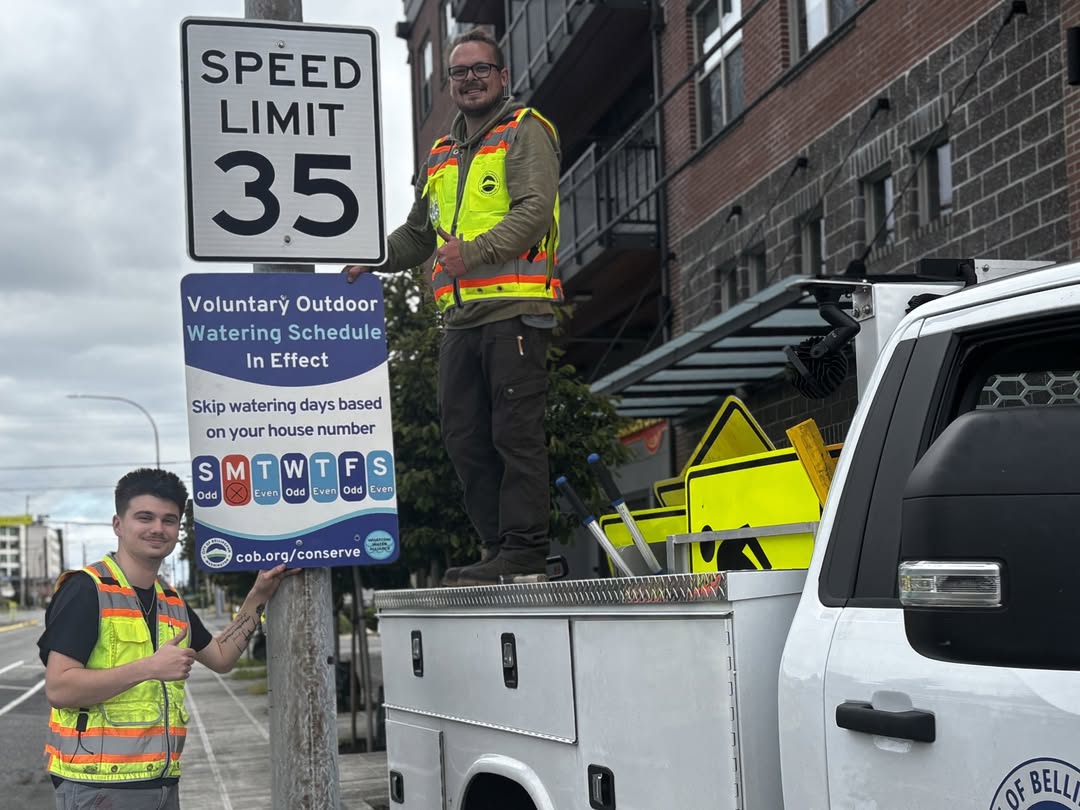
If you drive around Bellingham in June and notice small signs posted near parks and green spaces with watering day reminders, you are seeing the City of Bellingham's voluntary outdoor watering schedule in action. The annual program runs June 1 through September 30 and asks residents to space out their outdoor watering to reduce peak demand on the city's water treatment system.
The schedule divides residential addresses by odd and even numbers. Odd-numbered addresses are asked to water only on Sundays, Wednesdays, and Fridays. Even-numbered addresses should water on Tuesdays, Thursdays, and Saturdays. Everyone -- regardless of address -- is asked to skip Mondays entirely. The city posts reminder signs around neighborhoods each summer as a low-key prompt, not an enforcement mechanism.
The reason for the schedule has to do with summer demand peaks rather than supply shortages. The City of Bellingham Public Works Department notes that outdoor watering can increase the city's overall water use by up to 50 percent during dry summer months. A significant portion of that water is lost to evaporation, over-watering, and runoff rather than reaching plant roots. When many residents water at the same time, the water treatment plant must operate at or near peak capacity for extended periods, increasing wear on equipment and energy use.
The city notes that Bellingham's drinking water supply is stable and no shortages are anticipated this summer. The voluntary schedule is a system efficiency measure rather than a drought emergency response. That said, Washington State Department of Ecology declared a drought for Whatcom County in April 2026, reflecting below-average snowpack statewide. Conserving water now helps preserve regional water resources for later in the season when surface flows and reservoir levels are typically at their lowest.
One option the city recommends for those looking to reduce water use further is allowing lawns to go dormant during the dry season. Bellingham's rainfall pattern means that most grass species will naturally go brown in summer and green up again once cooler, wetter fall weather returns. Dormant lawns require no summer irrigation and typically recover fully without any special treatment when conditions improve.
Residents who want to make a more formal commitment to water conservation can take the City Water Conservation Pledge. In exchange, the city provides free outdoor water-saving tools, which can include items like rain gauges, hose nozzles, or mulch to reduce evaporation in garden beds. The pledge page also has additional tips for reducing outdoor water use beyond scheduling.
Outdoor watering restrictions interact with the broader water picture in Whatcom County this summer. The Stage 1 burn ban taking effect June 15 is also tied to dry conditions and elevated fire risk across the region. For more on that, the full burn ban details and emergency briefing cover what is and is not permitted during Stage 1 restrictions.
The watering schedule signs will remain posted in parks and neighborhoods through the end of September. Questions about the program can be directed to the City of Bellingham Public Works Department.