
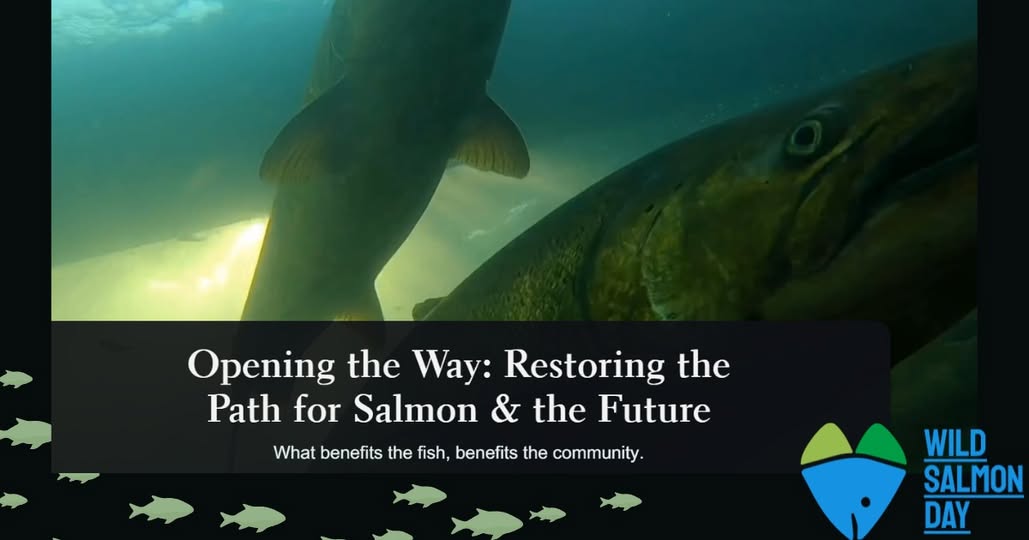
June 1 is Wild Salmon Day, and Whatcom County is marking it with a reminder of how much work is underway to bring salmon back to the Nooksack River and its adjacent coastal streams. Whatcom County Public Works, the Lummi Nation, the Nooksack Indian Tribe, and the Washington Department of Fish and Wildlife are collaborating on a long-range recovery effort that spans habitat restoration, watershed planning, floodplain management, and long-term stewardship.
The Nooksack River basin drains most of Whatcom County, from the upper reaches near Mount Baker and the North Cascades down through the fertile agricultural lowlands and into Bellingham Bay and Lummi Bay. Historically, the watershed supported abundant runs of Chinook, coho, chum, pink, and sockeye salmon, as well as steelhead. Those runs have declined sharply over the past century due to a combination of factors: habitat loss from development and agriculture, water withdrawals, culverts and other barriers that block fish passage, and the legacy effects of historic logging in the headwaters. Recovery is slow work, but it is underway.
The four-agency collaboration is organized under the WRIA 1 Salmon Recovery Plan, the region's official framework for coordinating salmon restoration efforts across the Nooksack watershed. The plan identifies barriers to salmon recovery, prioritizes restoration projects, and tracks progress over time. An interactive story map highlighting the challenges salmon face in the Nooksack system and the progress being made is available through the Whatcom County Public Works website.
Salmon recovery in this watershed is inseparable from the treaty rights of the Lummi Nation and the Nooksack Indian Tribe. Both tribes have reserved treaty rights to harvest salmon, rights that are constitutionally protected and that courts have affirmed depend on the availability of harvestable fish. The tribes are not just partners in the recovery effort; they have a legal and cultural stake in its outcome that predates Washington statehood by decades. Tribal co-management has been a central feature of Pacific Northwest salmon policy since the landmark Boldt Decision of 1974.
Floodplain restoration is one of the most impactful things the collaborative can do. Floodplains provide off-channel rearing habitat where juvenile salmon can grow through their first year with lower predation pressure and more food availability than in the main river channel. The Nooksack's lower reaches have been heavily diked and channelized for agriculture and flood control over the past century, dramatically reducing the amount of accessible floodplain. Projects that reconnect even small sections of floodplain can have outsized benefits for salmon populations. Washington Department of Fish and Wildlife tracks salmon population data and helps coordinate where restoration investment will have the greatest effect.
Ongoing work in the watershed also intersects with the WRIA 1 water rights adjudication, the legal process to register and establish priority for water use claims in the basin. How water is allocated between agricultural, residential, and instream flow needs will directly affect how much water is available in the river during critical low-flow summer periods when juvenile salmon are most vulnerable. The county is holding help sessions for water rights claimants through 2027, and the June 9 session in Deming is the next opportunity for rural landowners who need assistance. More information is available on the upcoming help session.
Wild Salmon Day is not just a ceremonial observance. It is a reminder that salmon recovery requires sustained, coordinated effort across agencies, jurisdictions, and generations. The Nooksack watershed has the natural capacity to support healthy salmon runs again. Whether it gets there depends on the choices made now about land use, water management, and habitat restoration. The work continues.