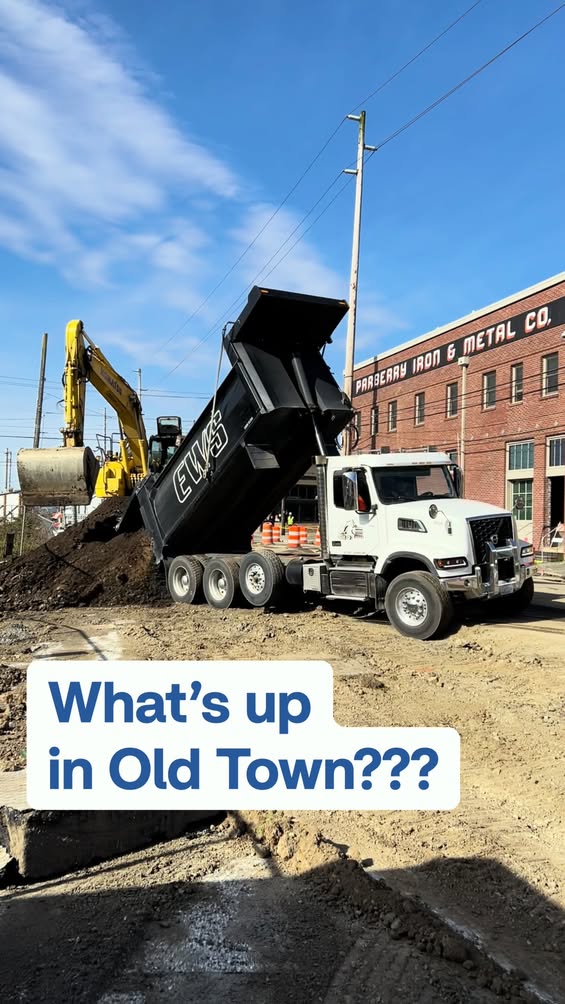
Street construction in Bellingham's Old Town Urban Village is entering its most active phase this spring, with major streetscape improvements now underway on C, D, and E Streets between Holly and Bancroft, and on Astor Street between C and F Streets. The City of Bellingham announced this week that residents and drivers should expect equipment in the area and occasional delays on Holly Street through the summer months as crews work to transform the historic neighborhood.
Old Town is one of Bellingham's oldest commercial districts, situated just west of downtown near the waterfront. The neighborhood has been the subject of significant redevelopment investment over the past several years. In 2024, developers completed storefront renovations at 701 W. Holly Street, and construction on the first new residential building -- an 84-unit apartment on the 700 block -- began in March 2025. The streetscape improvements now underway are the infrastructure backbone that will support all of that new development, modernizing streets that in some stretches have gone largely unchanged for decades.
When completed, the project will widen roadways, add sidewalks where gaps currently exist, improve street lighting, and increase stormwater capacity throughout the affected blocks. Where feasible, existing above-ground utilities will be moved underground -- a change that will significantly improve the visual character of the streetscape. The project is part of the broader Old Town Urban Village Development plan, which envisions the district as a walkable mixed-use neighborhood anchored by new housing, ground-floor retail, and improved public spaces.
The City has asked for patience from drivers navigating the area. Holly Street, which serves as the main east-west corridor through and adjacent to the construction zone, will see periodic disruptions from equipment movement and staging. Crews will be working across multiple blocks simultaneously as the project accelerates into the warmer months. Pedestrians and cyclists who normally use routes through the affected streets may need to adjust their paths temporarily.
The full scope of the streetscape improvements spans from back of curb to back of curb, meaning the entire right-of-way is being reconstructed rather than just surface-patched. That level of work is consistent with what the City committed to under its agreement with the Old Town development partners. The project details are available at cob.org, where the City maintains an active project page with updates on schedule and scope.
Old Town has seen its share of starts and stops over the years. Previous redevelopment plans for the district stalled during the economic downturns of the late 2000s and early 2010s. The current effort, which pairs private investment in new buildings with public investment in streets and utilities, represents a more coordinated approach. The first new apartment building alone will bring dozens of new residents to the neighborhood, and several additional buildings are planned across eight city blocks in the district.
For those who regularly drive, walk, or bike through Old Town, the short-term disruption is a sign of longer-term change. The improvements to lighting, sidewalks, and stormwater infrastructure will make the neighborhood safer and more functional for everyone who uses it -- residents, businesses, and visitors alike. The underground utility work in particular will reduce the frequency of future street cuts needed for maintenance, which is a long-term cost savings for the city.
Construction work is expected to continue through the summer of 2026. The City has not announced a specific completion date for all phases of the streetscape project, as timelines can shift based on weather, utility complications, and coordination with the active development sites. Drivers should plan for delays on Holly Street during peak construction hours and look for signage directing traffic around work zones. More information on the project timeline and what to expect can be found on the city's project page.